
What Is an Authorized Commercial Furniture Dealer and Why Does It Matter?
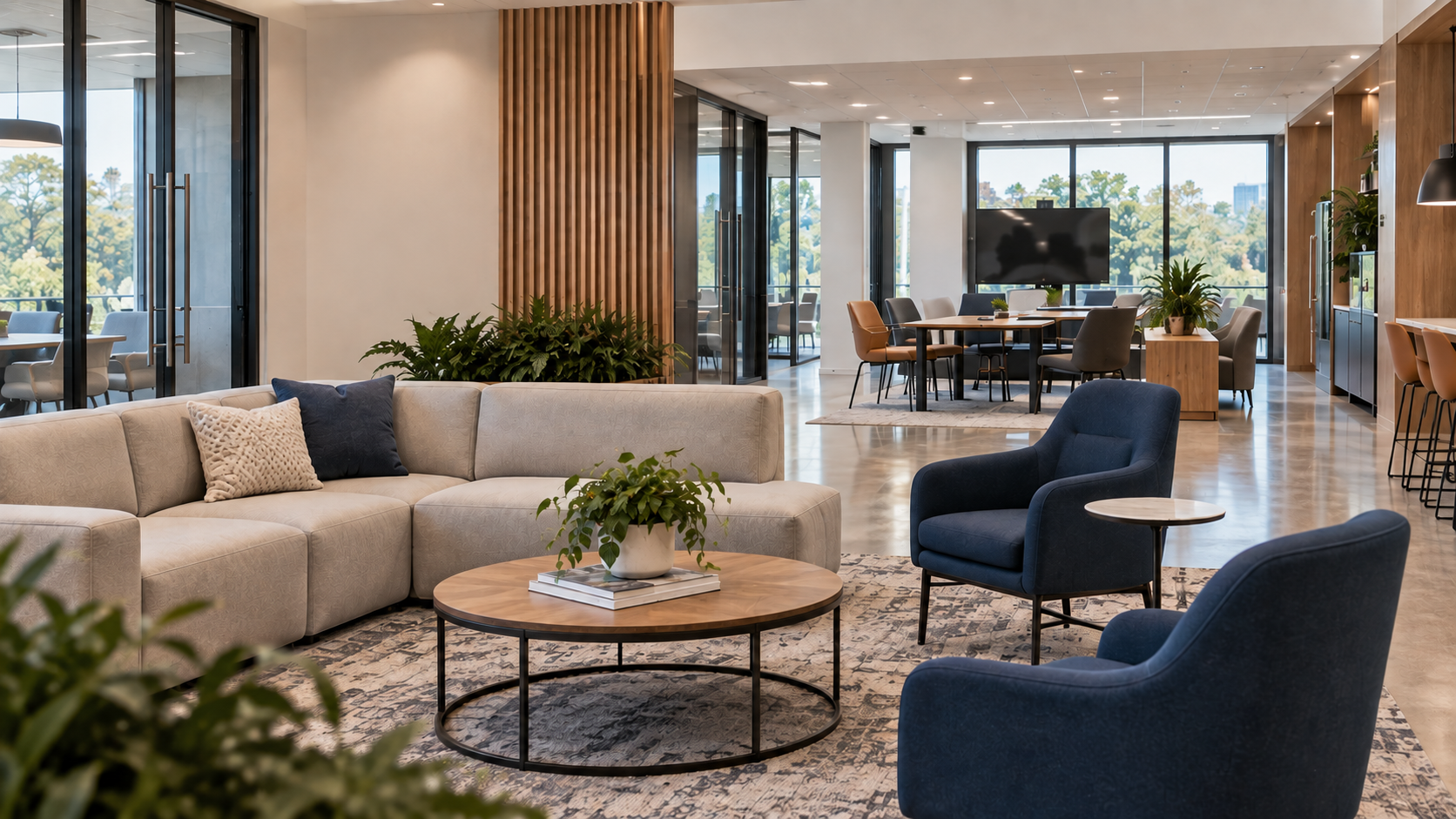
When you hear “furniture dealer”, you might picture a company that sells desks, chairs, and tables. In the commercial furniture world, the role goes much further than that.
An authorized commercial furniture dealer helps organizations determine what their space actually needs. That starts with understanding the people who will use it: how they work, how teams interact, what challenges they face in their current environment, and what the organization wants the space to accomplish.
From there, interior design and product expertise come together to translate those needs into solutions that make sense for the organization, its culture, its space, and its budget.
In other words, a commercial furniture dealer isn’t simply there to answer “What furniture do you want?”
A good one helps answer “What should the space do for the people using it?”
So, What Is an Authorized Commercial Furniture Dealer?
An authorized furniture dealer is a company approved by a furniture manufacturer to represent and sell its products within a particular market or territory. That authorization gives the dealer direct access to the manufacturer’s products, training, specification resources, technical expertise, warranty support, and other resources.
But that’s only one part of the dealer’s role.
A full-service commercial furniture dealer can bring together interior design, space planning, FF&E, product specification, project management, installation, and ongoing facility support to help take a project from an initial need to a completed space.
Rather than approaching furniture as a collection of individual products, the dealer looks at how those products work together within the larger environment and, most importantly, how that environment supports the people using it.
Commercial Furniture Dealer vs. Furniture Retailer: What’s the Difference?
The biggest difference isn’t simply what they sell. It’s how they approach the project.
A traditional furniture retailer generally sells the products a customer requests. If a customer asks for a particular desk, chair, or table, the retailer’s role is primarily to facilitate that purchase.
A commercial furniture dealer takes a more consultative approach.
Before recommending products, the dealer’s design team learns about the organization itself. How do employees work? How do teams collaborate? What types of spaces do people use throughout the day? Where does the current environment create challenges? How might the organization change in the future?
The goal isn’t simply to fill a floor plan with furniture. It’s to find solutions that support the people, culture, workflows, space, and long-term goals of the organization.
This approach is sometimes referred to as design-assist. The furniture dealer can collaborate with the client and project team throughout planning and design to evaluate solutions, budgets, product applications, lead times, and other considerations before decisions are finalized.
Where Interior Design Expertise Comes In

Commercial interior designers consider much more than aesthetics, including circulation, ergonomics, accessibility, privacy, acoustics, collaboration, technology, storage, flexibility, and how different types of work happen throughout a space.
Two organizations with the same number of employees and the same square footage may need completely different solutions.
A healthcare organization, university, corporate office, and financial institution each have different users, workflows, durability requirements, and priorities. Even two organizations within the same industry can have very different cultures and ways of working.
Understanding those differences allows a commercial furniture dealer with interior design expertise to recommend solutions based on how the space needs to perform, not simply how it needs to look.
Why Does Working With an Authorized Dealer Matter?
Product and Application Knowledge
Commercial furniture can be highly configurable. A single workstation may involve decisions about dimensions, worksurfaces, storage, privacy, power, data, ergonomics, finishes, accessories, and future reconfiguration.
The question isn’t only whether a product fits within the available square footage. It’s whether it’s appropriate for the application.
Authorized dealers have access to manufacturer training, product resources, specification tools, and technical information that help their teams understand how products can be used and configured.
Combined with interior design expertise, that knowledge helps translate an organization’s needs into practical furniture solutions.
Direct Manufacturer Resources and Support
An authorized dealer has a direct relationship with the manufacturers it represents.
The relationship provides access to current product information, specification resources, ordering systems, warranty processes, replacement components, and manufacturer support.
For clients, this creates a clearer path from initial specification through installation and long-term service.
Design-Assisted Problem Solving

Every organization works differently, which is why the process shouldn’t begin with a product catalog.
Instead, it begins with a conversation.
How does your team work today? Where does collaboration happen? Where do employees need privacy? What isn’t working in the current environment? How is technology used? What might your organization need from the space five years from now?
Those conversations can uncover needs that aren’t obvious from a floor plan alone.
The resulting solution can then be developed around the organization rather than asking the organization to adapt to the furniture.
Coordination With the Project Team
Commercial furniture doesn’t exist independently from the rest of the building.
Furniture may need to coordinate with electrical and data locations, architectural dimensions, flooring, lighting, technology, wall systems, doors, circulation paths, construction schedules, and building access.
Commercial furniture dealers often work closely with architects, interior designers, general contractors, facility managers, procurement departments, and owners.
Early coordination can help identify conflicts while there is still time to address them rather than after products arrive on site.
Professional Installation and Long-Term Support
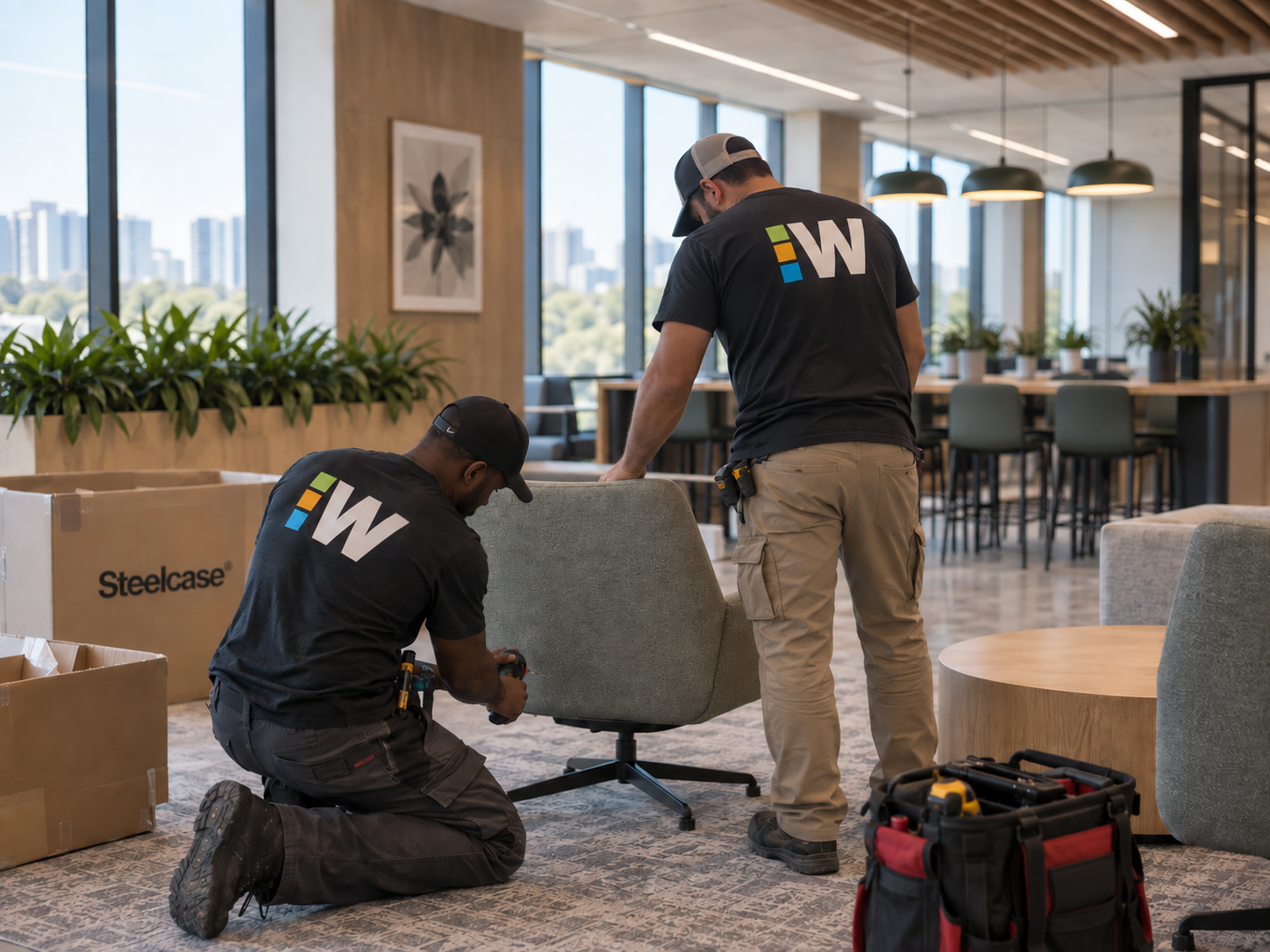
Selecting the right furniture is only valuable if it is installed correctly.
Commercial furniture installation can involve hundreds of individual components that need to be delivered, staged, assembled, leveled, connected, adjusted, and place according to the project plans.
And the relationship doesn’t necessarily end after installation.
Organizations grow. Departments relocate. Teams change. Technology evolves. Furniture may need to be reconfigured, expanded, repaired, or refreshed.
An established commercial furniture dealer can remain a resource for warranty needs, replacement parts, reconfigurations, additions, moves, and ongoing facility services throughout the life of the space.
When Should You Involve a Commercial Furniture Dealer?
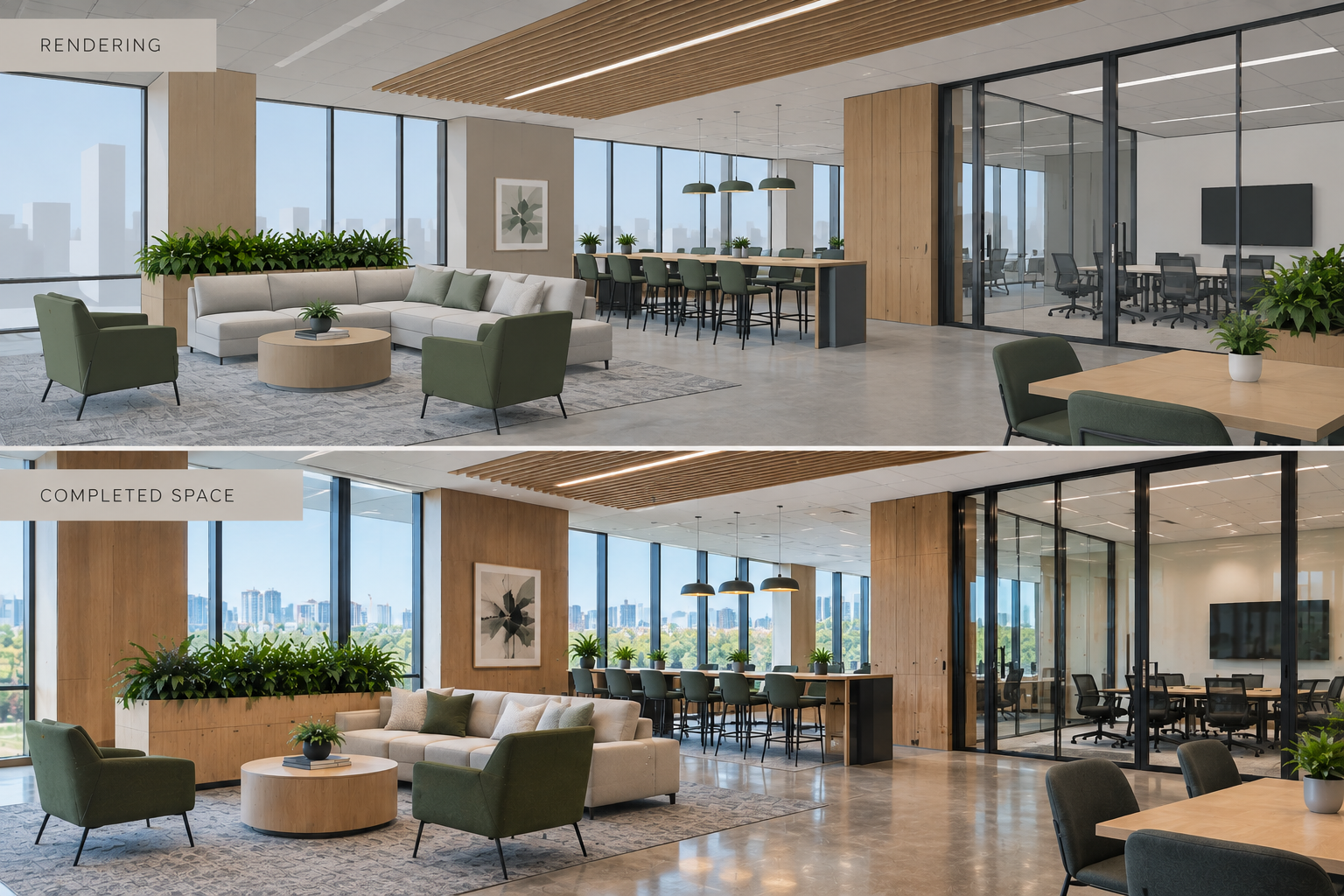
Ideally, before you’re ready to order furniture.
One common misconception is that the furniture dealer comes in after the architect or interior designer has completed the space and the organization is ready to purchase products.
Earlier involvement can create more opportunities to make informed decisions.
During planning and design, a commercial furniture dealer can help evaluate budgets, space requirements, furniture applications, power and technology needs, product availability, lead times, and installation considerations.
The dealer can also coordinate with architects, designers, contractors, technology partners, and other members of the project team so furniture decisions are considered alongside the rest of the built environment.
You don’t need to know exactly which chair, desk, workstation, or conference table you want before starting the conversation.
In fact, figuring out what you need is part of the process.
What Should You Look for in a Commercial Furniture Dealer?
The manufacturers a dealer represents are important, but they shouldn’t be the only consideration.
Look at the expertise and services behind the products.
Does the dealer have experienced commercial interior designers? Can the team provide space planning and design-assist services? Do they understand FF&E specification and procurement? Can they coordinate with your architect, contractor, and technology partners? Do they provide professional installation? Will they still be there when your space needs to change years from now?
You should also consider the dealer’s experience with projects similar to yours. Different markets, including corporate, healthcare, and education environments, can have very different requirements.
A strong commercial furniture partner should help you think through the entire lifecycle of your space, not simply the initial purchase.
Workplace Solutions: Commercial Furniture Expertise in Louisiana and Mississippi
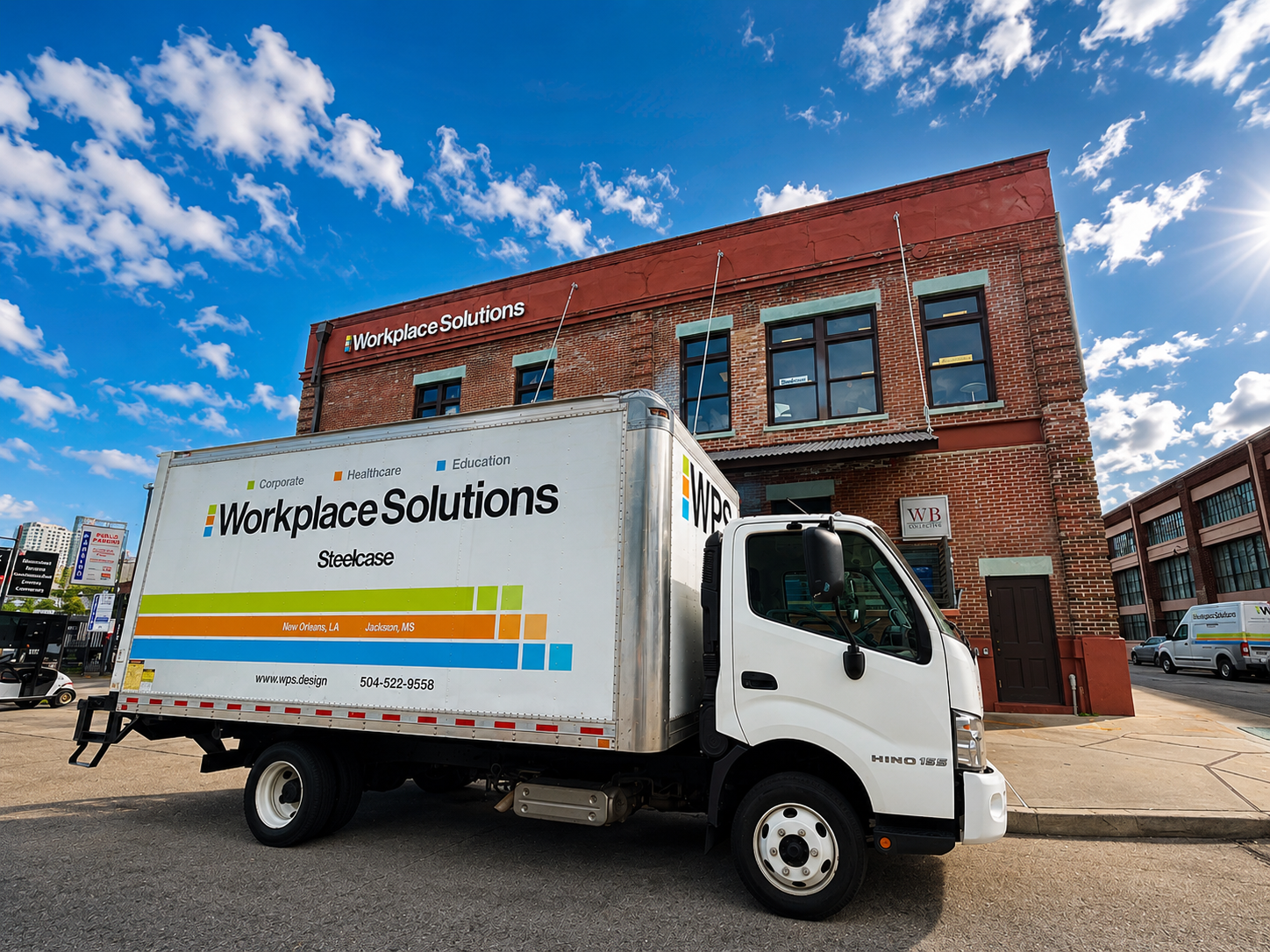
Workplace Solutions is an authorized Steelcase dealer serving organizations throughout Louisiana and Mississippi.
Our process starts with understanding the client. We learn how your organization works, how your people use their environment, where challenges exist, and what you want your workplace to accomplish.
From there, our interior design and project teams develop solutions around your people, culture, space, budget, and goals.
Our capabilities include commercial furniture and FF&E, space planning and interior design, architectural solutions, workplace technology, project management, installation, and ongoing facility services.
We work alongside businesses, healthcare organizations, educational institutions, architects, interior designers, contractors, and other project partners to create environments designed around the people who use them.
Because choosing commercial furniture shouldn’t begin with asking, “What do you want to buy?”
It should begin with asking, “What does your space need to do?”
Planning a commercial furniture, new construction, or renovation project in Louisiana or Mississippi? Contact Workplace Solutions to start the conversation.